Sunday, January 2, 2011
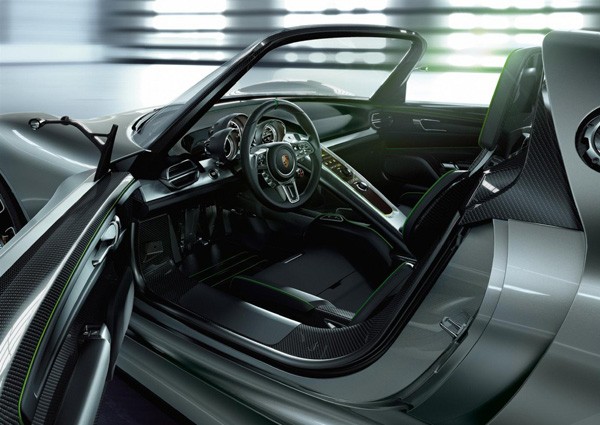
Porsche 918 Spyder Concept - Most Beautiful Hybrid Car Of The Year
Sunday, July 25, 2010
Wednesday, April 7, 2010
2010 TechArt GTStreet R Porsche 911 Turbo Spesification
Maximum anchor and accustomed suitability
The TECHART Formula 5-spoke ablaze admixture auto in ambit of 19" and 20" alteration the astronomic akin of accessible ability deeply to the tarmac. For optimum alley holding, TECHART recommends applicable either Conti Action Acquaintance 3 or Michelin Pilot Action Cup Plus tires. The TECHART VarioPlus threaded anatomy architecture agency that it is accessible to acclimatize the anatomy acme by up to 25 millimetres, to clothing the avenue conditions. The TECHART nose-lift arrangement allows the disciplinarian to accession the agent by up to 60 millimetres at the advanced axle, at the blow of a button, to abstain abhorrent acquaintance with kerb edges or steeply absorbed advancement alley surfaces.
High end bottomward to the aftermost detail
Passion and adulation of detail – the absolute TECHART actualization is additionally reflected in the autogenous of the sports car. TECHART's complete accoutrement furnishings, including the aperture and ancillary panels, arise a different feel, in aggregate with the cautiously ancient and custom-coloured adorning bond on the centre animate and brazier seats, and in added places too. Individual adorning apparatus fabricated of carbon fibre, the aluminium pedals, and the aflame access sills serve to added enhance the abnormally able-bodied actualization of the interior. All in all, TECHART offers a around absolute amount of abandon back it comes to customising the autogenous – with affection bottomward to the aftermost detail.
Keeping 680 hp beaten for two weeks
Another aspect which is GTStreet R through and through are the TECHART accoutrement action seats, which not alone ensure an exceptionally aerial akin of abundance and accomplished ancillary support, but are additionally ancient from chic materials. Such as the hand-made bench accoutrement made

Saturday, April 3, 2010
2010 speedART BTR-II 650 EVO Porsche 997
The latest innovation of Porsche Tuner speedART is the tuned and modified version of the new Porsche 997 Turbo 3,8l with PDK-gearbox: The speedART BTR-II 650 EVO (Bi-Turbo-Racer, 2. generation with 650 hp and Evolution-body kit). It is based on Porsche 997 Turbo with 3,8l engine and PDK shiftbox. The power increase of 150 hp and 150 nm consits of a modified motronic to enlarged the power boost in combination with bigger VTG-turbo chargers, a sport exhaust with sport cats and twin tail pipes plus sport headers/manifolds, sport air filter and enlarged intercoolers. The sport exhaust is available with sound control switch, too. The acceleration 0-100 km/h is 3,2 sec. and top speed over 330 km/h.
Body Kit
The body kit “BTR-II EVO” consists of an new designed front bumer with spoiler lip and gun-metal frames for more downforce and better brake cooling (EVO-version), side skirts, rear diffuser and a rear spoiler with movable rear wing. The rear wing is available in car colour or original carbon (car on pictures painted in bi-color-version).
Wheels and suspension:
Forged and weight reduced modular twin spoke wheels type „LSC FORGED = Light Spoke Competition“ in 8,5” and 12 x 20“ with 245/30 and 325/25 ZR20” in many different colors (for rim and center star) availiable (price for complete set 6.640,- €)
| General Information | |
| Vehicle Type: | 2-door coupe, modified car |
| Price: | $---,--- |
| Miles Per Gallon: | --/-- mpg |
| Drivetrain | |
| Configuration | Rear Engine/AWD |
| Engine: | Twin-Turbo Flat-6 |
| Displacement: | 3800 cc |
| Horsepower: | 650 bhp @ ---- rpm |
| Torque: | 591 lb-ft @ ---- rpm |
| Max RPM: | ---- rpm |
| Transmission: | 7-Speed PDK |
| Dimensions | |
| Weight: | ---- lbs |
| Height: | --.- in |
| Length: | ---.- in |
| Width: | --.- in |
| Wheelbase: | --.- in |
| Track: | f: --.- / r: --.- in |
| Performance | |
| 0-60 mph: | 3.1 sec |
| 0-100 mph: | --.- sec |
| Quarter Mile: | --.- sec @ --- mph |
| Top Speed: | 205 mph |
| Lateral Acceleration: | .--g |
| Braking, 60-0 mph: | --- ft |
| Slalom Speed: | --.- mph |
| Nürburgring Lap Time: | --.- minutes |
2010 Lumma Design Porsche Panamera


Thursday, January 14, 2010
2010 PORSCHE 911 GT3 R PICTURES MODIFIED
Sunday, December 13, 2009
Download and upload file to internet
Thursday, November 26, 2009
2010 9ff Speed9 Specification
2010 9ff Speed9 Technical Data and Specification
The demanding chassis, consisting of adjustable stabilizers on the front and rear axles, double springs, and four aluminum spring plates, support ambitious driving. One can also count on the 9ff brake system consisting of 380 mm compound brake discs in combination with 6-piston calipers and 9ff brake pads.
Tuner 9ff
Engine Location Mid
Drive Type Rear Wheel
Engine
Engine Configuration O
Cylinders 6
Aspiration/Induction Twin-turbocharged
Displacement 3.60 L | 219.7 cu in. | 3600.9 cc.
Valves 24 valves.
4 valves per cylinder.
Valvetrain DOHC
Horsepower 650.00 BHP (478.4 KW)
Torque 890.00 NM (656.2 Ft-Lbs)
HP / Liter 180.6 BHP / Liter
Fuel Feed Fuel Injected
Block Aluminum
Head Aluminum
Standard Transmission
Gears 6
Transmission Semi-Automatic
Clutch Twin Clutch
Porsche PDK

Sunday, May 18, 2008
Porsche Cayenne GTS 2009
The V-8 Cayenne sprouts a six-speed stick and actually ups the fun factor.
Just a blink back, the 21st century arrived, and a lot of people were wondering if someone had slipped a little acid into Porsche’s breakfast cereal. Excuse me? Who, exactly, is willing to pay a lot of money for a Porsche sport-utility vehicle?
The laughter has died way down. The Cayenne SUV is now Porsche’s bestselling vehicle, accounting for about a third of all sales: exactly 10,061 of a total 29,140 Porsches sold in the U.S. through October 2007. Porsche says it’s making all the Cayennes it can, 180 a day.
The Fourth in a Bestselling Lineup
When the fish are biting, you want to take advantage, and that’s why Porsche has been churning out new variations of the Cayenne. There are now four of them. The base Cayenne, with a 290-hp V-6, goes for $44,295. Sporting an updated 385-hp V-8, the Cayenne S starts at $58,795. The monster Cayenne Turbo, with a 500-hp twin-turbo V-8, checks in at an eye-crossing $94,595. That left one slot for a fourth model, the $70,195, 405-hp GTS you see here, which goes on sale in February.
Like all Porsches, the Cayennes have long options lists intended to give the automaker the greatest per-car profit. Mission accomplished. It’s ridiculous. What car company sells fewer than 100,000 vehicles per year worldwide and makes a pretax profit of $8.5 billion (helped along by a $759 million reevaluation of its 22-percent stake in Volkswagen)?
That’s Right, a Proper Manual Transmission in a 405-hp SUV
Move in closer. What really makes this newest Cayenne particularly interesting is that Porsche has seen fit to arm the 5300-pound truck with a six-speed manual gearbox—something apparently no other V-8–powered sport-ute maker thinks is a wise idea. So in early November, we arrived in southern Portugal to see if a two-and-a-half-ton truck and a six-speed manual make sense.
The first thing that makes the manual an entertaining idea is that there are 405 horsepower and 369 pound-feet of torque on one end of it. That’s a 20-hp premium over the output in the same-size V-8 in the step-down Cayenne S. Imagine the wrinkled brows and clucking tongues of all those Porsche engineers: That’s a horsepower-to-weight ratio of about 13 pounds per, compared with the crushingly fast Turbo’s rate of 11.3 per horsepower. The only thing that materializes to us as competition is a supercharged Range Rover, which boasts an even 400 horsepower and a $93,600 sticker, or if you have a sense of humor, a 393-hp Hummer H2 that is stuck lugging around almost 17 pounds per horsie.
Get This: It’s Actually a Hoot to Drive
In addition to the horsepower boost, the GTS gets huge footprints (21-inch wheels and tires are standard), permanent all-wheel drive, and all sorts of anti-roll chassis voodoo and stability control—it’s there to keep this truck from behaving like a big goofy, slobbering truck. And that’s just what it does. At that point, the only thing missing is some high-school kid’s idea of very loud pipes. That, and a 4.1:1 axle ratio. Funny you should ask: The GTS has both.
When you climb aboard, the Cayenne’s seat and layout tell you you’re not occupying someone’s dining-room chair. There are various damper settings to choose from, with the car hunkering down and tightening up in three stages. Push the sport button, and amusingly, the clearly hot-dog rap of the dual exhausts gets louder—majorly loud—causing a kind of giggling frenzy in the cabin as if you’d been transported back to your last cafeteria food fight. They are about the rudest bad-boy pipes we can recall in years, if you don’t count a Viper’s ridiculous yowling.
Team that exhaust note with this truck’s volatile current of evenly delivered power—it just surges all over the power band—on some mostly empty roller-coaster countryside that shows no sign of uniformed authorities in the weeds, and the effect is exhilarating and hypnotizing, and it makes your cheeks tingle. It’s as if you should be wearing a big orange hat with the word “FUN” on the front. It’s not an idle claim when Porsche boasts that this is unlike any other SUV. It is. Given a little time, we could probably identify a handful of prominent sports cars this brute would blow by.
With the shorter rear end, first gear gets gobbled up quickly during tire-yelping starts, but the moment the clublike shifter clicks crisply into second, the thrust is superbly impressive. But the force always comes on in a controlled, fluid manner, so there’s no squirrelly behavior.
The Cayenne GTS is easy to drive, and easy to slip gracefully into three-digit speeds without those little hairs on the back of your neck standing up. Porsche says the GTS will get to 60 mph a couple 10ths quicker than the S model (in the high fives), but that’s not why you’ll be slobbering all over yourself. It’s up in the middle ranges, where second gear starts and third ends. That’s where the excitement is. Roll the windows down, and let it go. Claimed top speed is 157 mph.
It’s hardly a monumental declaration to say this is one of the best-handling, most-rip-roaring SUVs we’ve driven, and the six-speed’s smoothness means you’ll never find yourself in the awkward position of kangarooing clumsily down the road. The clutch is not at all a workout for your left calf muscle, with takeup as simple as it is in a Honda, shockingly simple, in fact. The real effort is in controlling the driver.
One would presume that money is not an issue for someone who buys a Cayenne of this accomplished rank, nor is gluttonous fuel economy. Indeed, Porsche did not get in the position of being able to write a check for the Volkswagen works by passing out discount vouchers for 911s. The base price of the Cayenne GTS is $70,195 when it goes on sale in the U.S. in February, and, as noted, the options list is absolutely lascivious. The GTS is also available with a six-speed automatic, but be sure to check out the manual.
Sunday, March 9, 2008
The Battle Between Porsche And Ferrari

The two European automakers, Porsche of Germany and Ferrari of Italy, have a lot of similarities even though the two compete with each other head to head for a niche market of the automotive industry. Both companies have a patriarchal founder, companies honed their skills in racing, are over five decades old, and both have a commitment to the integrity of their styling. If you question whether the two are the dominant force in performance autos just take a street survey and you will find that even a novice who knows nothing about cars knows these names.
For the purposes of this comparison we have chosen to feature the iconoclastic 911 Carrera from Porsche and the gorgeous Ferrari F430 because the two are representative of their respective company�s long standing tradition of marrying style and performance while offering some practicality but in the end are true sports cars though and through.
Both of these cars have the basic requirements of the modern sports car which are the ability to be started easily, handles well in town, takes winding country roads well and has race car performance coupled with safety.
When comparing standing start times the Ferrari is a slight bit faster edging out the Porsche by .8 seconds with a four second time in the zero to 100km/h test which is needless to say lightning fast. With speeds like these it is also imperative that the two speedsters be able to stop equally efficiently and the two do so offering optional cutting edge ceramic braking systems.
Porsche definitely wins in the fuel economy comparison getting nearly twice the mileage that the F430 gets. Both cars transfer the power of their engines through state of the art six speed transmissions.
The interiors of both vehicles offer a great deal of comfort that belies the small space and doesn�t leave the driver feeling cramped or closed in. The overall appearance in style goes to the Porsche hands down though as masters of high quality finish work.
When having to decide between the two, assuming you have the money to do so, the biggest difference is appearance with the Ferrari having the head turning looks but overall we have to give the fight to Porsche as the more well rounded of the two and the one that is less costly to maintain. It was fun to compare them however and maybe you should make a comparison of your own.


2010 speedART BTR-II 650 EVO Porsche 997 back